
Svadhyaya – The Practice of Self-Study
Dwayne Fedoriuk | JUN 21, 2025
yoga
ayurveda
self study
mindfulness
meditation
niyamas
yoga over 50
sageviewwellness
Svadhyaya – The Practice of Self-Study
Dwayne Fedoriuk | JUN 21, 2025
Introduction: Meeting Ourselves on the Mat and in Life
Svādhyāya, often translated as self-study or study of the sacred scriptures, invites us to turn inward with curiosity, compassion, and a willingness to see what is. More than a mental exercise, Svādhyāya is a spiritual practice — one that helps us understand our patterns, beliefs, and deepest truths.
For those of us navigating the second half of life, this practice can feel especially relevant. With more lived experience behind us, Svādhyāya becomes an invitation to reflect on who we have been, who we are now, and who we are becoming.
Traditional Roots
In the Yoga Sūtras of Patañjali, Svādhyāya is introduced as one of the five Niyamas — inner disciplines that support personal growth and spiritual discipline.
Sutra II.44
Svādhyāyād iṣṭa-devatā saṁprayogaḥ
"Through self-study, one comes into contact with the divine presence within."
This sutra reminds us that self-study is not just about knowledge or self-analysis — it’s a path to connection. When we turn inward with sincerity and presence, we begin to uncover the divine spark that lives in each of us. Whether we think of that spark as intuition, soul, consciousness, or higher self, Svādhyāya helps us remember who we truly are beyond our roles, labels, and stories.
Modern Meaning: A Mirror for the Inner Life
In today’s world, Svādhyāya is more important than ever. Surrounded by noise and distractions, it’s easy to lose connection with ourselves. This practice is a conscious act of slowing down and turning inward — not to judge or fix, but to witness.
It’s where we begin to ask:
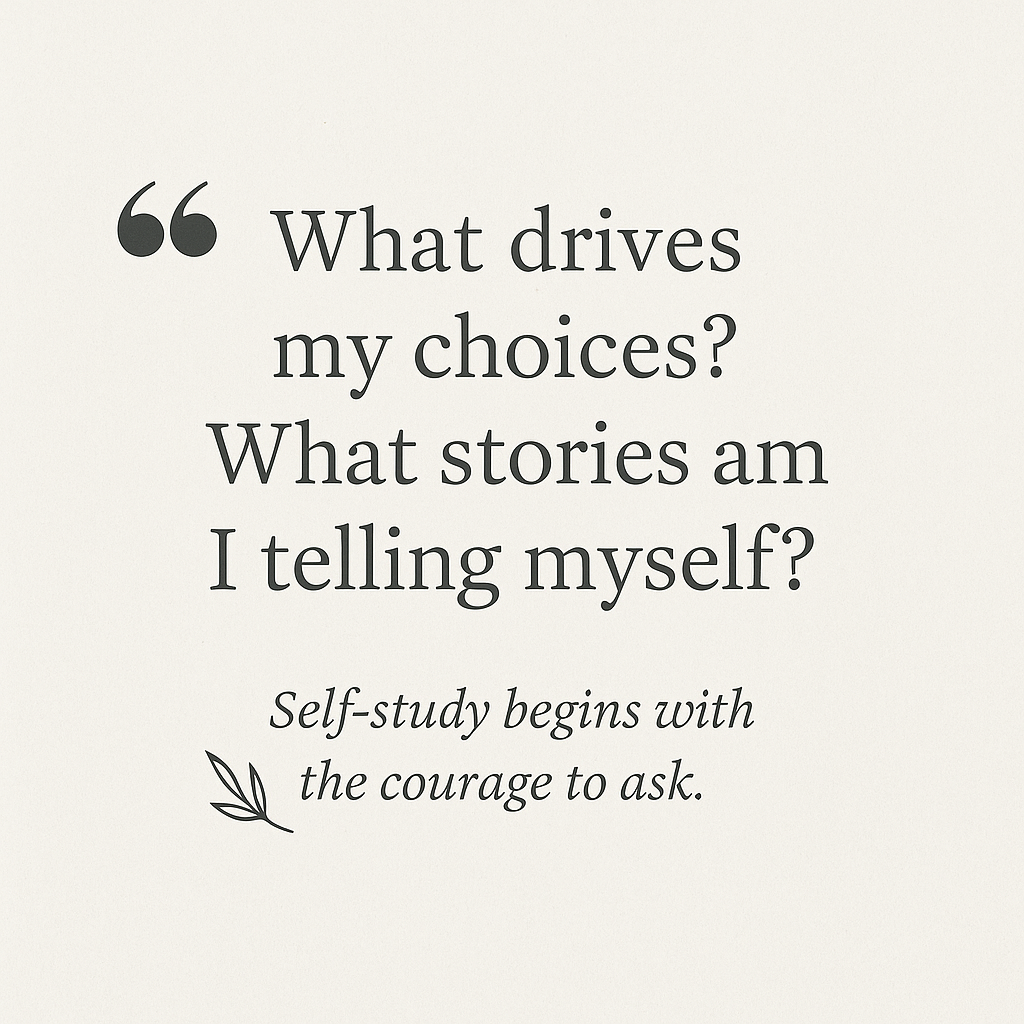
What drives my choices? What stories am I telling myself? What is asking for healing or change?
As we practice Svādhyāya, we may begin to recognize:
We also begin to see our resilience, our wisdom, and our capacity to grow. For many people in their more mature years, Svādhyāya can be a gentle yet powerful midlife reawakening — an opportunity to reframe the past and shape the future.
Svādhyāya and the Midlife Crisis: A Yogic Reframe
Many people in midlife experience what the world calls a “crisis” — a period of inner questioning, loss of identity, or emotional upheaval. But from the lens of yoga, this moment isn’t a breakdown — it’s a call to Svādhyāya.
Midlife offers a rare opportunity to step back and ask:
“Is the life I’ve built aligned with who I truly am?”
The roles we’ve played (as professionals, parents, partners) begin to shift. Old ambitions lose their grip. What once defined us may no longer feel true.
Instead of avoiding these feelings or distracting ourselves, Svādhyāya asks us to pause, witness, and listen. It’s in this space that real transformation begins.
By turning inward, we move from midlife crisis to midlife awakening.
On the Mat: Practice Suggestions
Yoga becomes a living form of Svādhyāya when we practice with awareness.
Try:
Practices to Cultivate Svādhyāya Off the Mat
A Final Reflection
Svādhyāya reminds us that growth begins with awareness. When we choose to turn inward, we take responsibility for our life — not through shame or blame, but through understanding. Self Realization can only be attained through personal responsibility. It is the recognition that when there is conflict, we must first look to ourselves as the source. Ask yourself, what part did I play in it? From there you are able to harness your potential and perhaps gain limitless understanding. Placing your destiny in your own hands.
The more we see ourselves clearly, the more we live in alignment with our values, our purpose, and our deepest peace.
"The choices we make lead us to the results we receive."
Svādhyāya teaches us that every conscious choice begins with knowing who we are.
Journal Prompt
Take a quiet moment and reflect:
“If I stop identifying with my roles, titles, and past, who am I now?”
Let this question guide your awareness — not to find answers, but to deepen presence.
Coming Soon: Ishwara Pranidhana - (Surrender)
Be sure to subscribe so that you receive notifications on our future blogs!
Dwayne Fedoriuk | JUN 21, 2025
Share this blog post
 OfferingTree